
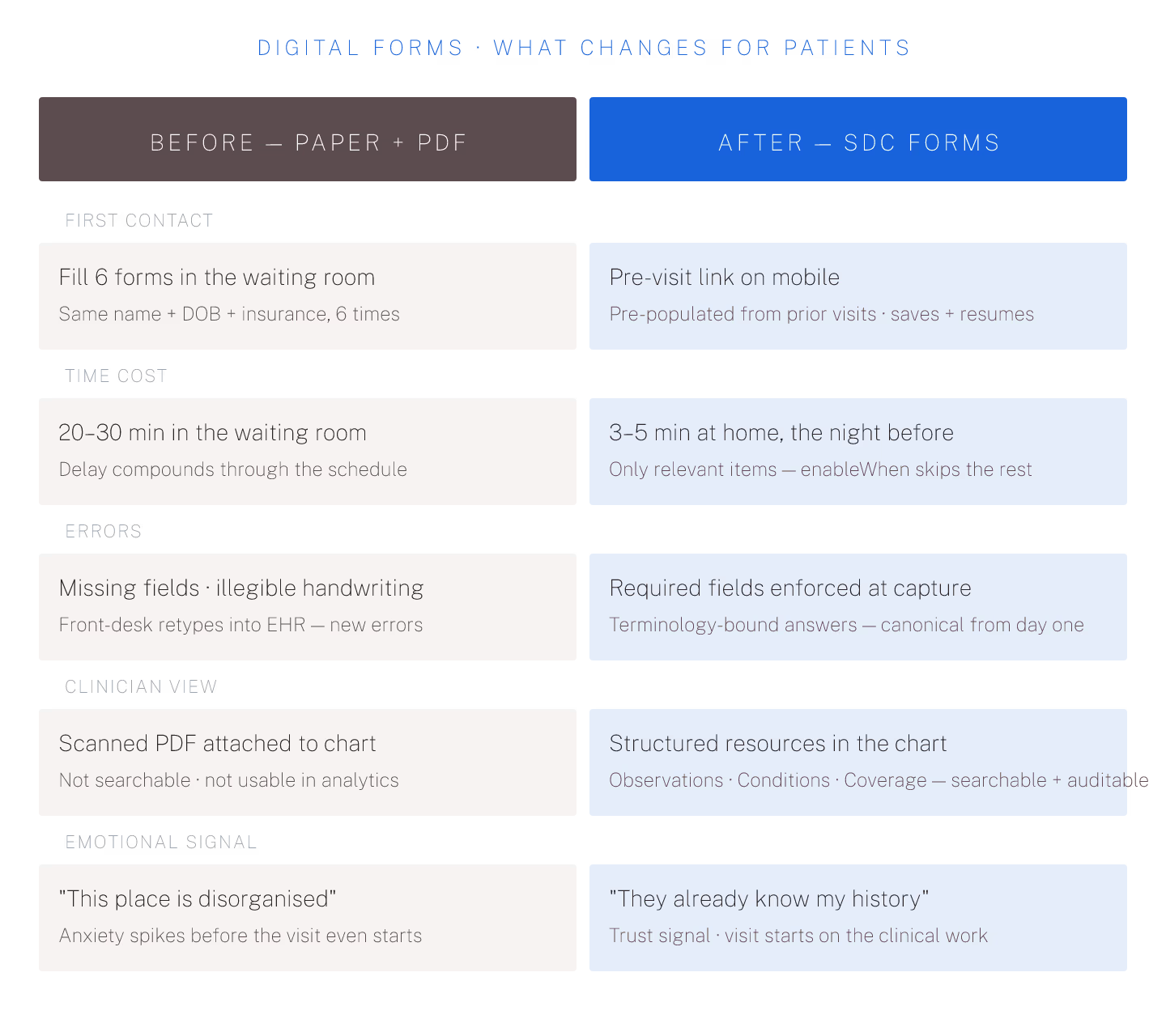
SDC digital forms change patient experience in specific ways. Understanding what actually changes shapes deployment priorities.
Changes for patients
1. Pre-visit intake completion. Complete forms before arrival; save check-in time. 2. Digital format familiar. Mobile-friendly forms feel like other apps. 3. Pre-populated known data. Retype less; less error-prone. 4. Save-and-resume convenience. Long forms don't require single sitting. 5. Immediate confirmation. Submitted state visible.
Changes for staff
1. Less manual data entry. 2. Fewer errors from handwriting misinterpretation. 3. Faster patient throughput. 4. Analytics-ready data. 5. Compliance documentation cleaner.
Changes for clinicians
1. Structured intake data available pre-visit. 2. Longitudinal PROM tracking. 3. Consent tracking automated. 4. Care plan documentation structured. 5. Downstream reporting reliable.
Design levers
1. Pre-population → biggest completion impact. 2. Mobile-first → most user impact. 3. Save-and-resume → long-form necessity. 4. Time estimate → reduces abandonment. 5. Progress indicator → reduces abandonment.
Common experience issues
1. Desktop-only UI → mobile users struggle. 2. No pre-population → all-retype. 3. No save-resume → session loss = restart. 4. Long forms without estimate → abandonment. 5. Confusing terminology → completion fails.
Vendor state
| Platform | Patient UX | Staff UX | Clinician UX |
|---|---|---|---|
| Aidbox Formbox | Excellent | Full | Full |
| LHC-Forms | Good | Good | Good |
| Epic MyChart | Native | Native | Native |
| Cerner PowerChart | Native | Native | Native |
Digital forms transform patient experience when design is right. The levers above cover most productive deployments.